Phase 03
AS-IS analysis and TO-BE redesign
Map how work moves today, locate failure demand and then redesign the flow around earlier quality checks and visible progress.
Inspect the evidence
See the proposed journey in action
From incomplete intake to a clearer handoff
Try the five-step application demo: guided questions, a conditional evidence checklist, validation and a safe sample confirmation.
BPMN: the rework loop and the proposed controls
Public-review models refine the original case-study drafts: explicit lanes, decision paths and a non-interrupting review timer. They are analysis models, not executable workflows.
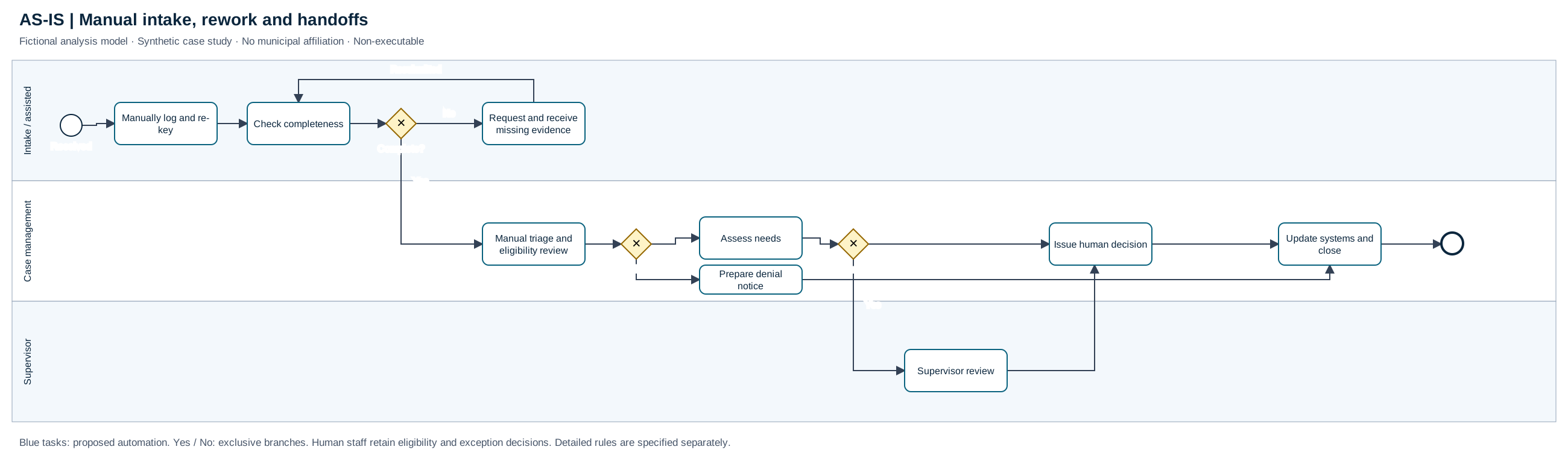
Intake staff log and check an application. Missing evidence returns through a resubmission loop; case workers assess eligibility and supervisors handle complex cases before closure.
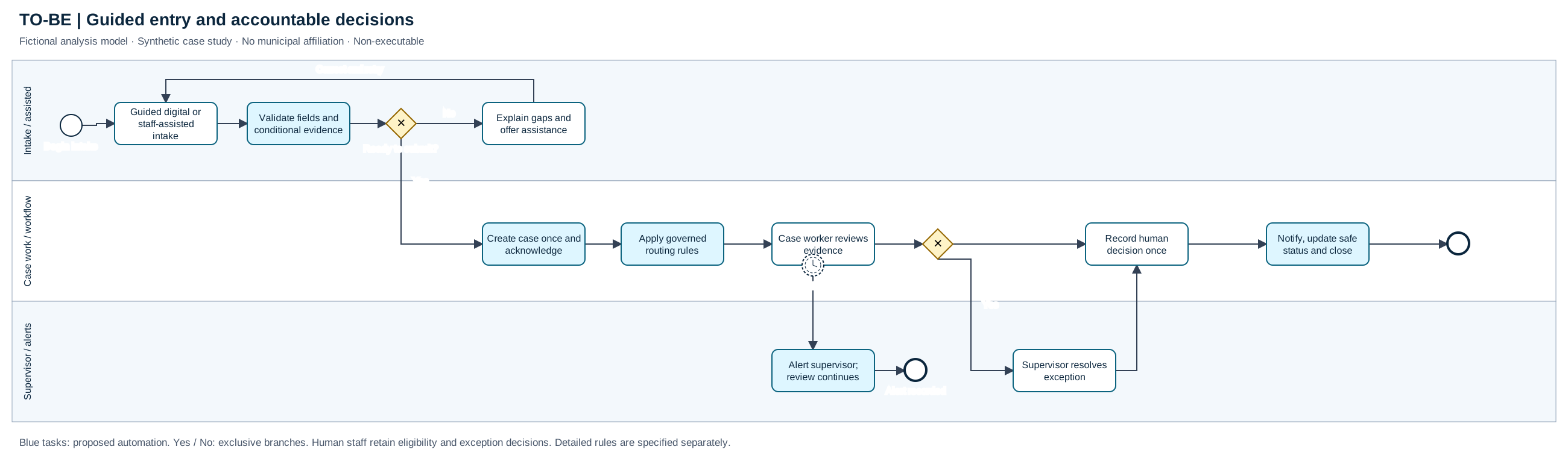
Guided intake validates evidence before a case is created. Exceptions go to a supervisor. A non-interrupting timer prompts escalation while review continues; the human decision feeds one notification and closure path.
Circles: events · Rounded rectangles: tasks · Diamonds: exclusive decisions · Dashed timer boundary: escalation without cancelling the review. Scroll within a diagram to follow its branches.
Late quality discovery
- 1Receive
Different channels begin with different guidance.
- 2Check
Completeness is checked manually and late.
- 3Chase
Staff and applicants repeat document follow-up.
- 4Assess
Cases wait across handoffs and exceptions.
- 5Close
Status and reporting are updated separately.
Governed entry and visible progress
- 1Guide
One governed question set supports digital and assisted service.
- 2Validate
Required fields and conditional evidence are checked at entry.
- 3Create
One case identifier starts an auditable event trail.
- 4Route
Approved rules move routine work; exceptions reach people.
- 5Inform
Applicant-safe status events show progress and next action.
Automate safely
- Field and format validation
- Conditional evidence checklist
- Explainable routing and SLA events
- Approved notifications and audit events
Keep human
- Eligibility and hardship decisions
- Ambiguous evidence
- Policy interpretation
- Document and priority exceptions
Control
- Role-based overrides
- Privacy-safe public status
- Accessibility and assisted routes
- Fallbacks and stop/go gates
My analysis and method Why this phase matters
Process mapping exposes handoffs, delays, exceptions and repeated work that individual screens or reports cannot explain.
Capability demonstrated
What this work shows
Connected operational symptoms to handoffs, re-keying and late validation.
Defined a simpler future state with explicit exception paths.
Separated safe orchestration from consequential human decisions.
Fictional municipal scenario, synthetic data, simulated discovery and validation. No City of Toronto affiliation or claimed production outcome.